James Van Der Beek Died at 48. The Test That Could Have Saved Him Is Being Ignored.
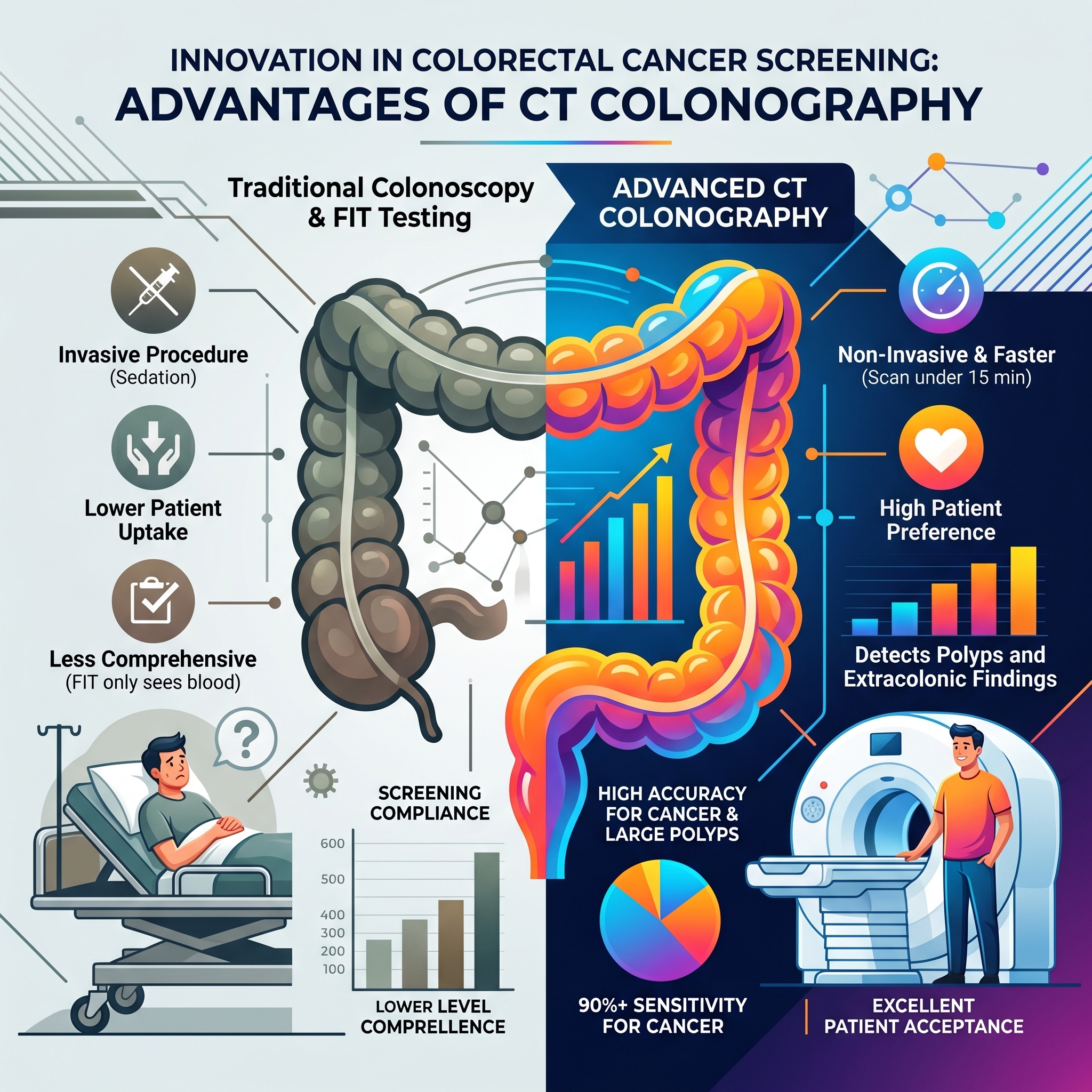
Following the death of actor James Van Der Beek at 48 from colon cancer, the shortcomings of current colorectal cancer screening guidelines deserve scrutiny. The American Cancer Society recommends screening begin at age 45 via traditional colonoscopy or stool testing — but both approaches fall short. Colonoscopy misses up to 25% of significant polyps, causes over 1,100 direct deaths and 64,000 complications annually in the U.S., and the age-45 threshold still misses more than half of cancers in the under-50 group where rates are climbing fastest. Stool tests, while safe, are poor at catching precursor polyps. A superior alternative — virtual colonoscopy (CT colonography) — detects 95% of cancers and 94% of key polyps with zero reported deaths worldwide in over 25 years of use. It also catches unsuspected non-colon cancers in 1 of every 300 exams. Yet it remains largely sidelined in American healthcare guidelines. As colorectal cancer rates surge among younger adults, virtual colonoscopy offers a safer, more accurate, and more cost-effective path to screening that could save thousands of lives.
Feb 184 min read