A groundbreaking study published today in JAMA confirms a troubling reality that we at ColoWatch® have been highlighting for years: colorectal cancer has become the leading cause of cancer deaths among Americans under 50.
According to the CNN report covering this research, deaths from colon and rectal cancers in the under-50 age group have risen 1.1% annually since 2005 — while deaths from nearly every other major cancer type have declined. This alarming trend has propelled colorectal cancer from the fifth most common cause of cancer deaths among young adults in the 1990s to the top position in 2023.
"We weren't expecting colorectal cancer to rise to this level so quickly, but now it is clear that this can no longer be called an old person's disease," said Dr. Ahmedin Jemal, senior author of the study and senior vice president at the American Cancer Society.
The Numbers Tell a Devastating Story
The statistics demand our attention:
- Nearly 60 new colorectal cancer diagnoses occur in people under 50 every single day in the United States — that's one diagnosis every 25 minutes
- Only 37% of adults ages 45-49 are up-to-date on their colorectal cancer screening
- More than 60% of colorectal cancer patients under 50 are diagnosed at stage 3 or 4, when treatment becomes significantly more difficult
- While mortality rates for breast cancer, brain cancer, leukemia, and lung cancer have all declined in young adults, colorectal cancer mortality continues to climb
Why Is This Happening?
The research community is still working to fully understand the drivers behind this epidemic. However, several factors are clear:
Symptom dismissal is costing lives. Young adults with early warning signs — blood in stool, unexplained bowel changes, persistent abdominal pain — often have their concerns minimized. "There is an unmeasurable group of young adults who have symptoms that may be consistent with colorectal cancer, but either sit on the symptoms because they are busy or are scared, or eventually access their health care system but encounter a provider who thinks it's just a hemorrhoid," noted Dr. Y. Nancy You of MD Anderson Cancer Center.
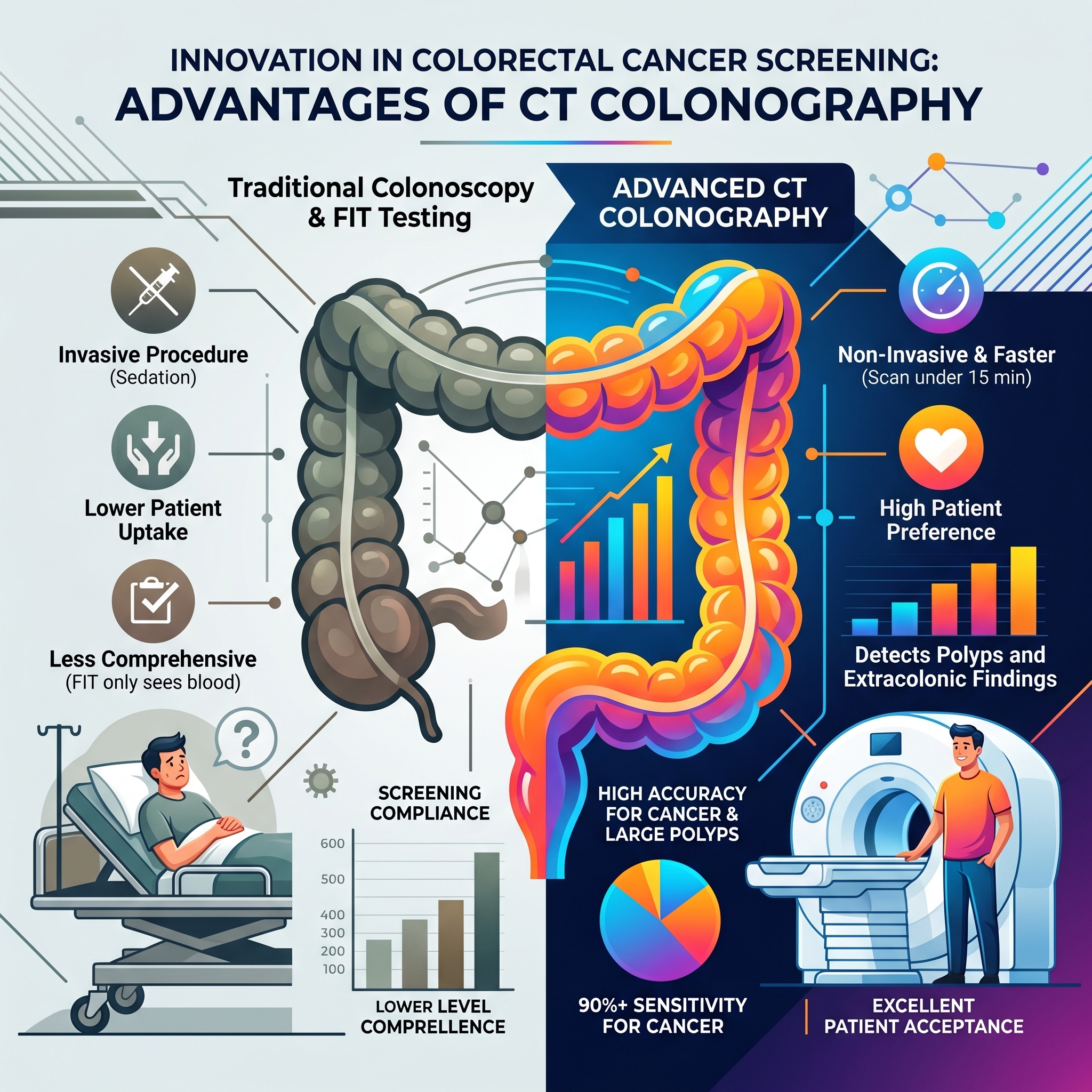
Screening barriers remain significant. Traditional colonoscopy requires sedation, meaning patients need someone to drive them home and typically take an entire day off work. For many young adults juggling careers, families, and financial pressures, these requirements create real obstacles to screening.
Awareness lags behind the threat. Many people still think of colorectal cancer as a disease affecting older populations. This perception delays both self-advocacy by patients and appropriate clinical responses by healthcare providers.
The Path Forward: Accessible Screening Saves Lives
Here's what often gets lost in these discussions: colorectal cancer is one of the most preventable cancers. Screening can detect precancerous polyps before they become malignant, and when cancer is found early, survival rates are dramatically higher.
The challenge is getting more people screened. And this is precisely why we founded ColoWatch®.
Virtual colonoscopy (CT colonography) offers a compelling solution to many screening barriers:
- No sedation required — patients can drive themselves and return to normal activities immediately
- 15-minute procedure — minimal time away from work or family
- Proven accuracy — over 20 years of research confirms it reliably detects concerning polyps
- Exceptional safety profile — zero reported deaths from virtual colonoscopy, compared to approximately 1,200 annual deaths associated with traditional colonoscopy complications
- Cost-effective — often less expensive than traditional colonoscopy
Colorectal cancer screening is one of only two screening types that can actually prevent cancer — not just detect it. By finding and removing polyps before they become cancerous, we have the power to stop this disease before it starts.
A Call to Action
The data is clear. The solutions exist. What's needed now is action on multiple fronts:
For individuals: Don't dismiss symptoms. If you're 45 or older, get screened. If you're younger and experiencing concerning symptoms — rectal bleeding, unexplained changes in bowel habits, persistent abdominal pain, unexplained weight loss — advocate firmly for evaluation.
For healthcare providers: Take symptoms in young adults seriously. The old assumption that "they're too young for colorectal cancer" is demonstrably costing lives.
For the healthcare system: We must eliminate barriers to screening. Technologies like virtual colonoscopy make screening more accessible — it's time to ensure patients know about all their options.
At ColoWatch®, we're committed to expanding access to virtual colonoscopy screening across the country. We believe no one should die from a cancer that is largely preventable. Today's research makes the urgency of this mission undeniable.
The time to act is now.
Sources: JAMA research article, CNN Health, Colorectal Cancer Alliance