A new study published this week in the journal Cancer has delivered a sobering wake-up call about the connection between lifetime alcohol consumption and colorectal cancer risk. Researchers found that heavy lifetime drinkers face up to a 91% higher risk of developing colorectal cancer compared to light drinkers.
At ColoWatch®, this finding doesn't surprise us — but it does reinforce why we're so passionate about making colorectal cancer screening accessible to everyone, especially younger adults who may not realize they're at risk.
The Numbers Don't Lie: Alcohol's Impact on Cancer Risk
The study, which followed more than 88,000 adults for nearly a decade, revealed alarming statistics:
- Those consuming over 14 drinks per week had a 25% higher risk of developing colorectal cancer compared to those who averaged one drink or less per week
- The risk nearly doubled for rectal cancer specifically — a particularly concerning finding given that rectal cancer is "often more difficult to treat," as noted by Dr. Jeffrey Farma from Fox Chase Cancer Center
- People who drank heavily at every stage of life showed the highest risk — a 91% increase compared to lifelong light drinkers
As Dr. Lynn M O'Connor from Mercy Medical Center explained to ABC News: "The longer someone drinks, the longer their colon and rectum are exposed damage and impaired repair, both major mechanisms of cancer."
Why This Matters More Than Ever
This research arrives at a critical moment in the fight against colorectal cancer. We're facing an epidemic: colorectal cancer is now the #1 cancer killer of adults under 50. The study's findings about rectal cancer risk are particularly troubling, as Dr. Fola May from UCLA notes: "We're seeing an uptick in rectal cancers."
What makes this especially concerning is that many young adults who may have engaged in heavy drinking during college or early adulthood might not realize they're at elevated risk. Traditional screening guidelines recommend starting at age 45, but as Dr. Farma warned: "If you've had prolonged heavy drinking and you develop symptoms like bleeding or persistent changes in bowel habits, you need to be evaluated — even in your 30s."
The study also offered a glimmer of hope: those who quit drinking showed significantly lower odds of developing precancerous polyps compared to light drinkers. As Dr. Farma noted, "These are modifiable risks. The choices people make over time matter, and the body can respond when those risks are reduced."
Breaking Down Barriers to Life-Saving Screening
Dr. May's observation in the ABC News report hits at the heart of our mission: "Colorectal cancer is one of the few cancers we can actually prevent or catch early, but fewer than 70% of eligible people get screened."
Why aren't more people getting screened? Fear, inconvenience, and misconceptions about the screening process continue to be major barriers. Many people associate colorectal cancer screening with traditional colonoscopy — a procedure that requires sedation, time off work, and can feel intimidating.
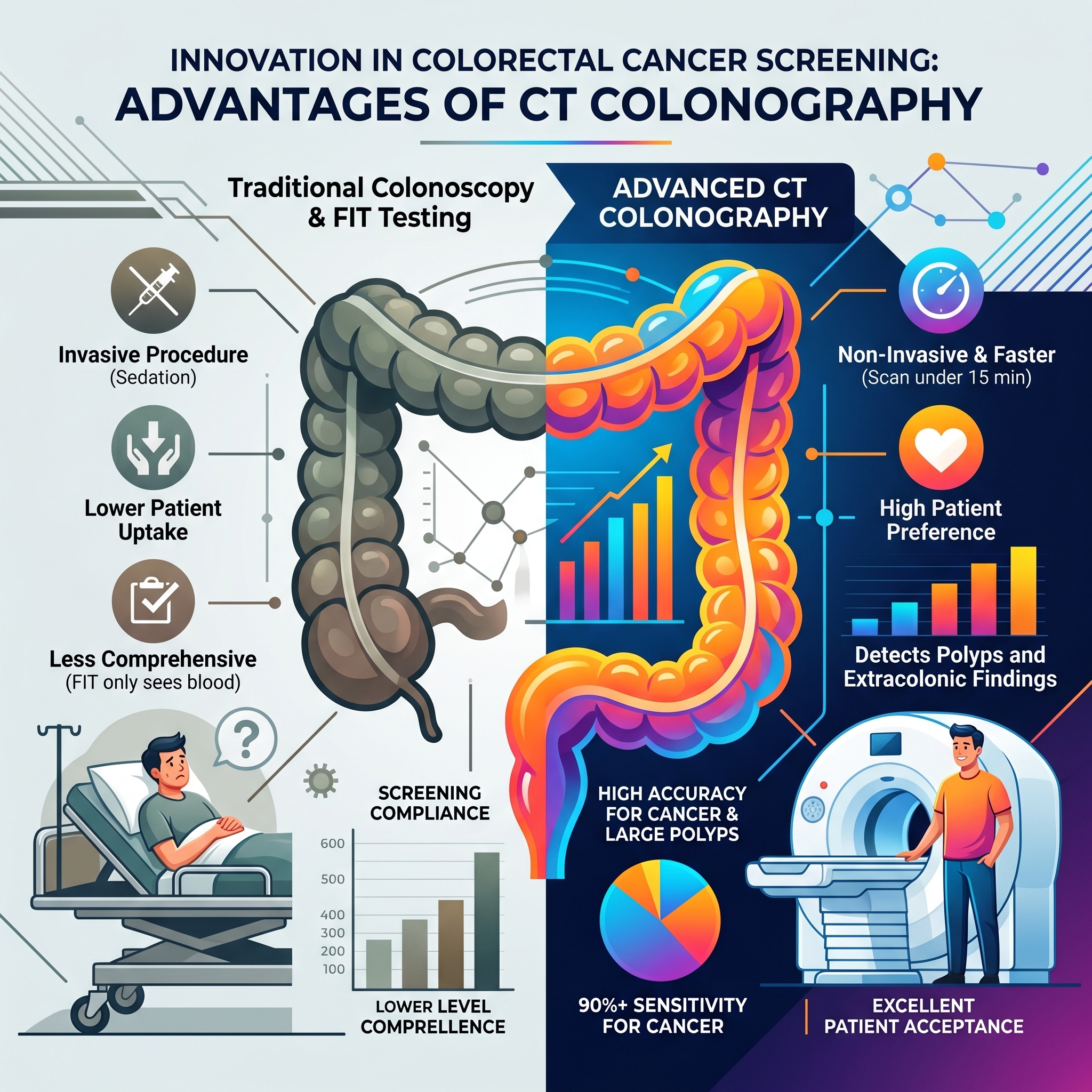
But here's what everyone needs to know: there are safer, more comfortable alternatives. Virtual colonoscopy (CT colonography) offers the same life-saving detection capabilities in just 15 minutes, with no sedation required and zero procedure-related deaths. It's the safest way to screen for colorectal cancer and polyps.
The Power of Early Detection
The researchers' findings about adenomas — precancerous polyps — underscore why screening matters so much. When we catch polyps early through screening, we can prevent cancer from ever developing. This is why colorectal cancer is one of the most preventable cancers when people actually get screened.
For those with elevated risk factors like heavy lifetime alcohol consumption, screening becomes even more critical. Virtual colonoscopy can detect polyps just as effectively as traditional colonoscopy, but without the barriers that keep people from getting screened in the first place.
Your Life Is Worth 15 Minutes
The study's lead researcher emphasized that "these numbers are not guarantees, but signals to do something before it's too late." We couldn't agree more.
If you've had periods of heavy drinking in your life, if you're experiencing any changes in bowel habits, or if you're simply due for screening — don't wait. Don't let fear or inconvenience stop you from potentially saving your own life.
Dr. May's words ring true: "Everyone should be screened. It saves lives, and people are dying unnecessarily when they put it off."
Take action today. Learn about virtual colonoscopy and find a screening option that works for your lifestyle. Because when it comes to colorectal cancer, early detection isn't just about treatment — it's about prevention. And prevention is the most powerful tool we have in this fight.